Fediverse-we-have is at a major inflection point
And so I did, and seeing all the discussion here for which I thank you all, I decided to put in way more effort than originally intended, and delving into much deeper subject matter. The article quotes @SorteKanin and mentions others in this thread, especially @silverpill as the pillar who upholds the FEP process today. I read the discussion with interest, but skipping the implementation details, to take a broader perspective.
All of you are right, and yet none of you are. There exists no clear path forward.
The road simply hasn’t been paved, and its unclear who can pave it.
The open standard is stuck, fossilised, unable to naturally evolve.
The chaotic grassroots ecosystem has moved on, unable to healthily grow.
The installed base that’s content with the status quo, has increasing inertia to change.
The only options that exist in the fediverse today are ..
- Either force-push changes through the formal W3C process, and hope for adoption.
- Or force-push changes as a post-facto interoperability leader, and hope for popular uptake.
With the fundamental architectural impact that most of the options have, both are ultra hard. Where @SorteKanin observes that open standards should not be controversial, I follow-up and reformulate that open standard designs should avoid misconceptions from the very start, as they are most costly if not addressed immediately and the cost only increases over time.
Grassroots open standards to evolve the fediverse
Pragmatic ways to solve the linked data conundrum
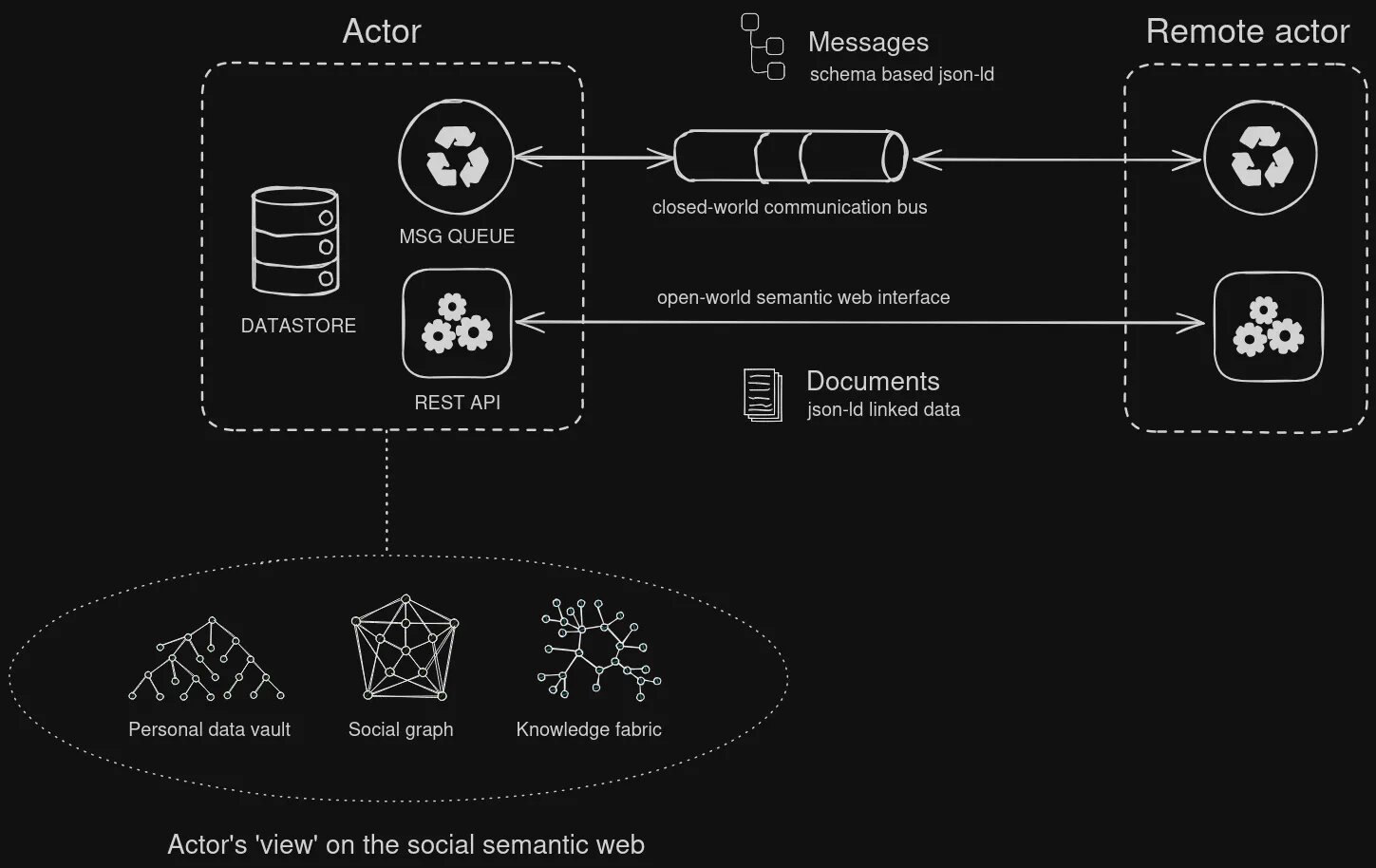
Protosocial AP overlay intends to split into two separate API’s exposed to the solution layers ..
- Protosocial API. Actor-based message bus-like abstraction, closed-world, plain JSON.
- Knowledge API. Optional extension that offers full-fledged, open-world Linked Data support.